
India’s Gen Z Revolt Explodes: ‘Cockroach’ Party Founder Detained as Youth Challenge Modi Government
Hundreds of young Indians take to Delhi’s streets waving national flags, demanding electoral transparency and the resignation of India's election chief as police detain protest leaders.
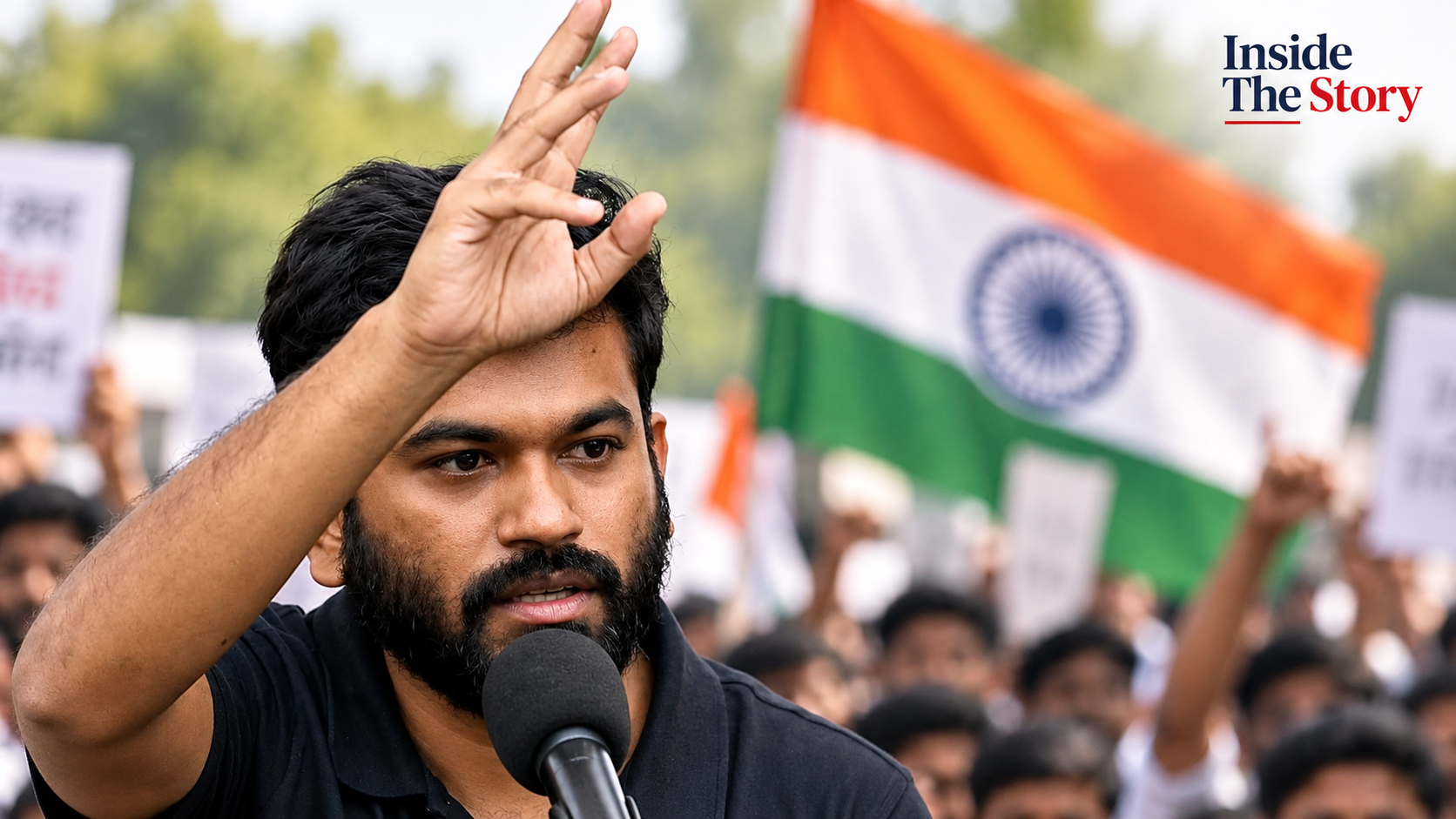
What began as an unusual online movement has grown into a wave of youth-led protests, raising serious questions about electoral transparency, democratic rights, and freedom of expression in India.
India is witnessing a growing wave of youth-led protests, with the detention of Cockroach Janta Party (CJP) founder Abhijeet Dipke sparking fresh controversy over democracy and freedom of expression.
Hundreds of young protesters gathered in New Delhi's Connaught Place on October 16, waving Indian national flags and demanding the resignation of Chief Election Commissioner Gyanesh Kumar.
But instead of a peaceful gathering at the planned protest site, demonstrators encountered heavy police security, barricades, and restrictions. Authorities closed Central Park, forcing protesters to gather around the surrounding streets.
Dipke was detained by Delhi Police as he approached his vehicle. Supporters attempted to intervene, while the movement accused authorities of trying to silence its leadership.
At the center of the controversy is India's Special Intensive Revision (SIR) of electoral rolls. Protesters allege that the process could remove legitimate voters and benefit Prime Minister Narendra Modi's ruling Bharatiya Janata Party (BJP).
The Election Commission has strongly rejected allegations of political manipulation, insisting the revision is designed to remove duplicate, deceased, and otherwise ineligible voters.
What makes the Cockroach Janta Party particularly unusual is its origin. The movement began in May 2026 after a controversial comparison involving unemployed young people and cockroaches. Rather than rejecting the label, activists transformed it into a symbol of resistance.
Within months, the youth-led organization attracted thousands of supporters, initially campaigning against unemployment, examination paper leaks, and government accountability.
The movement's growing popularity has also brought repeated confrontations with authorities. Other prominent leaders, including Saurav Das and Ashutosh Ranka, were detained and subsequently jailed following protests at Jantar Mantar.
Opposition leader Rahul Gandhi has criticized the arrests and questioned the restrictions placed on demonstrators. However, the opposition parties and the CJP have largely conducted their protests separately.
Police maintain that restrictions are necessary to preserve public order and prevent unauthorized gatherings. Activists, meanwhile, argue that waving the national flag and demanding accountability should not result in detention.
According to subsequent reporting, Dipke was granted conditional bail on October 17, although controversy surrounding the protests and restrictions continued.
The demonstrations now represent more than anger over electoral procedures. They reflect broader frustration among young Indians over employment opportunities, political accountability, civil liberties, and the country's democratic institutions.
For the government, the challenge is balancing public order with the right to peaceful protest. For young activists, the challenge is sustaining a movement while facing repeated restrictions and detentions.
Can India's Gen Z movement turn its growing frustration into lasting political change? The answer remains uncertain, but the Cockroach Janta Party has already become a visible part of India's national debate over democracy, elections, and the political power of its younger generation.